


When you visit the dentist, you may be asked to have dental X-rays as part of your examination. While your dentist can see quite a bit by examining your teeth and gums, some important areas of your oral health are hidden below the surface.
Dental X-rays provide a more complete picture of your teeth, jaw, and supporting structures. They can help your dental team identify problems early and make more informed decisions about your care.
What Are Dental X-Rays?
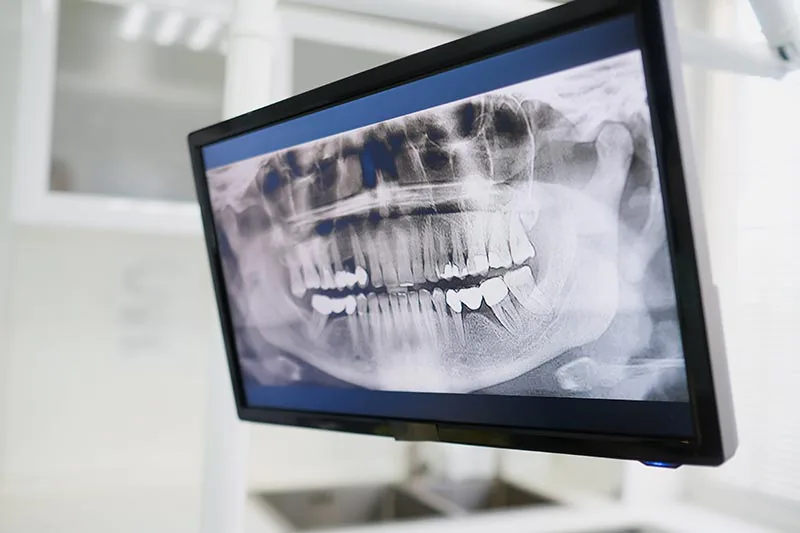 Dental X-rays are images that allow your dentist to see structures inside your mouth that aren't visible during a standard visual examination. Using a small amount of radiation, X-rays capture images of your teeth, roots, jawbone, and surrounding structures.
Different types of dental X-rays provide different views of your oral health. Your dentist will recommend the type of X-ray that is appropriate based on your age, oral health, symptoms, and treatment needs.
What Are Dental X-Rays Used For?
X-rays can help your dentist identify conditions that may not yet be causing noticeable symptoms. They can be used to look for:
- Cavities between or beneath teeth
- Tooth infections
- Bone loss associated with gum disease
- Impacted teeth
- Problems with tooth roots
- Developing teeth in children
- Cysts or other abnormalities
- Damage caused by dental trauma
- Changes in the jawbone
- The position of teeth before certain treatments
Because many dental problems can develop without causing pain, X-rays can sometimes help your dentist identify concerns before they become more serious.
Why Can't My Dentist Just Look at My Teeth?
A simple visual examination is an important part of every dental visit, but it doesn't tell the whole story. For example, a cavity can develop between two teeth where it may be difficult or impossible to see during a visual examination. Similarly, your dentist can't see the roots of your teeth or the bone surrounding them simply by looking inside your mouth.
X-rays provide information that complements your clinical examination. By combining what they see during an examination with X-ray images, your dental team can develop a more complete understanding of your oral health.
What Types of Dental X-Rays Are There?
Different dental X-rays are used for different purposes.
Bitewing X-Rays
Bitewing X-rays provide detailed images of the crowns of your upper and lower teeth. They're commonly used to look for cavities between teeth and evaluate the level of the supporting bone.
Periapical X-Rays
Periapical X-rays capture an entire tooth, from the crown down through the root and surrounding bone. They may be used when your dentist needs to investigate tooth pain, infection, or problems affecting the root.
Panoramic X-Rays
A panoramic X-ray provides a broad view of the entire mouth, including the upper and lower jaws, teeth, and surrounding structures. It can be useful for evaluating wisdom teeth, tooth development, jaw conditions, and planning certain treatments.
3D Dental Imaging
Some dental practices also use advanced 3D imaging, such as cone beam computed tomography (CBCT), when a more detailed view is needed. This technology can create three-dimensional images of the teeth, jaw, and surrounding anatomy and may be particularly useful for treatment planning involving dental implants, oral surgery, or other complex procedures.
Are Dental X-Rays Safe?
Modern dental X-ray equipment uses very low levels of radiation, and dental professionals take precautions to minimize exposure. Your dentist will recommend X-rays when they provide useful diagnostic information rather than simply taking them unnecessarily.
The frequency of X-rays varies from patient to patient. Someone with a history of cavities or other dental concerns may need imaging more frequently than someone with consistently healthy teeth and gums.
Your dentist will consider your individual needs when determining when X-rays are appropriate.
Why Are X-Rays Important for Your Dental Care?
Dental X-rays aren't simply another step in your appointment. They are an important diagnostic tool that can help your dentist understand what's happening beneath the surface.
By identifying problems earlier, X-rays can sometimes allow treatment to begin before a condition causes significant pain, damage, or more complicated dental concerns. They can also help your dentist plan treatments more precisely and monitor changes in your oral health over time.
At Broadwing Dental Studio, we take a comprehensive approach to your dental care. By combining detailed examinations with appropriate diagnostic imaging, our team can develop a clearer understanding of your smile and provide care customized to your needs. If you're due for a dental examination or have questions about whether you need X-rays, contact Broadwing Dental Studio to schedule your next appointment.